


Call us now
08045812717

 Send Inquiry
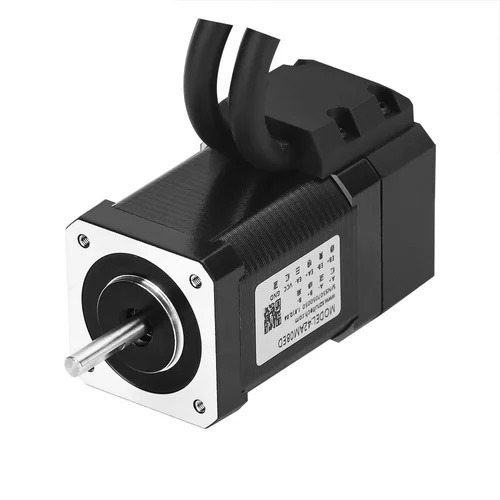
Stepper Motor
Price 1015.00 INR/ Unit
Stepper Motor Specification
- Current Type
- DC
- Rated Voltage
- 12 V DC
- Power Rating
- 5 W
- Efficacy
- High Efficiency
- Starting Type
- Direct On Line
- Poles Number
- 4
- Standard
- CE Certified
- Rated Frequency
- 50 Hz
- Pressure
- Atmospheric
- Motor Type
- Stepper Motor
- Torque
- 0.4 Nm
- Cooling Method
- Air Cooled
- Voltage
- 12 V DC
- Sealed Type
- Sealed
- Bearing Type
- Ball Bearing
- Horse Power
- 0.0067 HP
- Features
- Low noise, High precision, Compact size
- Ambient Temperature
- -10C to 50C
- Noise Level
- <50 dB
- Product Type
- Stepper Motor
- Output Power
- 5 W
- Frequency (MHz)
- 50 Hz
- Protect Feature
- Overload Protect
- Phase
- 2
- Speed
- 1200 RPM
- Power
- 5 W
- Color
- Silver + Black
- Dimension (L*W*H)
- 42mm x 42mm x 48mm
- Weight
- 450 g
- Shaft Diameter
- 5 mm
- Mounting Type
- Flange Mount
- IP Rating
- IP40
- Resonance
- Low Resonance Design
- Service Life
- >20,000 hours
- Lead Wire
- 4 Wires
- Applications
- Printers, CNC Machines, Robotics, 3D Printers
- Insulation Resistance
- >100 M (500VDC)
- Insulation Class
- Class B
- Duty Cycle
- Continuous
- Step Angle
- 1.8 per step
- Frame Size
- NEMA 17
- Control Method
- Unipolar/Bipolar
Stepper Motor Trade Information
- Minimum Order Quantity
- 01 , , Unit
- Supply Ability
- 50 Units Per Week
- Delivery Time
- 3-4 Days
About Stepper Motor
Stepper Motor
Technical Specification:
| Step Angle | 1.8 Degree |
| Speed | 1600 Rpm |
| Torque | 0.07 Nm / 0.22 Nm |
| Power Source | Electric |
| Phase | Three Phase |
| Frequency | 50 Hz |
| Model Name/Number | 35A01 / 39A02 |
| Iec Frame Sizes | 35mm / 39 mm |
| Shaft Diameter | 5 mm |
Precision Motor for Accurate Motion Control
With a fine 1.8 per step angle and high holding torque, this stepper motor ensures exceptional positioning accuracycrucial for applications in robotics, CNC machinery, and advanced 3D printers. Its low resonance design further minimizes vibration, guaranteeing smooth, repeatable movements in high-precision tasks.
Built to Last: Reliable Performance and Endurance
Engineered for durability, the motor boasts a sealed, corrosion-resistant housing, IP40 protection, and high-grade ball bearing construction. It is optimized for continuous operation, offering a service life of over 20,000 hours, making it a dependable choice for both demanding industrial and hobbyist projects.
Flexible and Safe Integration
Supporting both unipolar and bipolar drive methods, this motor provides design flexibility for various control systems. With overload protection, stable insulationrated above 100 M at 500VDCand CE compliance, safety and reliability are foundational to every installation.
FAQs of Stepper Motor:
Q: How is this NEMA 17 stepper motor typically used in practical applications?
A: The motor is commonly employed in high-precision devices such as 3D printers, CNC machines, robotics, and professional or consumer-grade printers. Its compact design and step accuracy allow for controlled and repeatable movements, essential in automation and robotics tasks that require exact position control.Q: What are the benefits of its low resonance design and high-precision features?
A: Low resonance construction minimizes vibrations, improving movement smoothness and accuracy. Combined with its fine 1.8 step angle, this ensures minimal mechanical noise and highly precise motion, which is especially valuable in applications like 3D printing and CNC milling where quality and detail are paramount.Q: When should you choose a unipolar versus a bipolar control method with this motor?
A: Unipolar control is advantageous for applications needing simpler wiring and higher reliability under light loads, while bipolar configurations are preferred for higher torque and efficiency demands. Selection depends on your systems control circuitry and desired performance characteristics.Q: Where is the optimal installation environment for this stepper motor?
A: Ideal conditions include an ambient temperature range of -10C to 50C and operation in an atmospheric pressure environment. With its IP40 rating and sealed design, it is best suited for indoor or protected enclosures where dust and moisture exposure are minimal.Q: What is the recommended process for integrating this motor into a CNC or 3D printer setup?
A: Begin by securing the motor using its flange mount. Connect the 4 lead wires to a compatible stepper driver, ensuring correct phase wiring per your controllers specification. Set the voltage and current limits in accordance with the 12 V DC supply and motor ratings, then calibrate your control software for 1.8 per step resolution.Q: How does the motors overload protection and insulation resistance contribute to operational safety?
A: Overload protection automatically limits current in the case of faults, preventing thermal damage. High insulation resistance (>100 M at 500VDC) further protects against electrical leakage, reducing the risk of short circuits or device failures during prolonged operation.Q: What factors contribute to the motors long service life and efficiency?
A: The motors robust construction, high-quality ball bearings, air-cooled design, and continuous duty rating ensure minimal wear over time. Its advanced winding and efficiency-oriented features reduce energy loss, supporting over 20,000 hours of reliable service.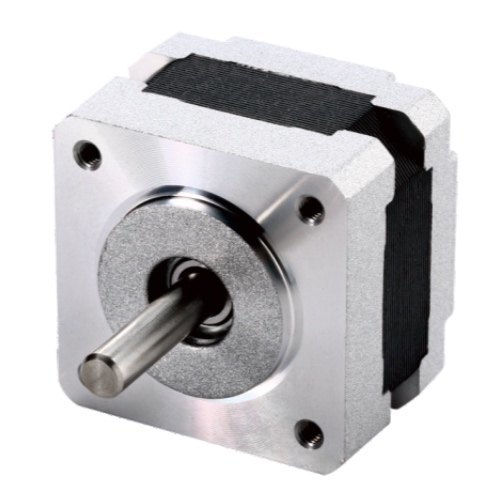

Price:
- 50
- 100
- 200
- 250
- 500
- 1000+

More Products in Stepper Motor Category
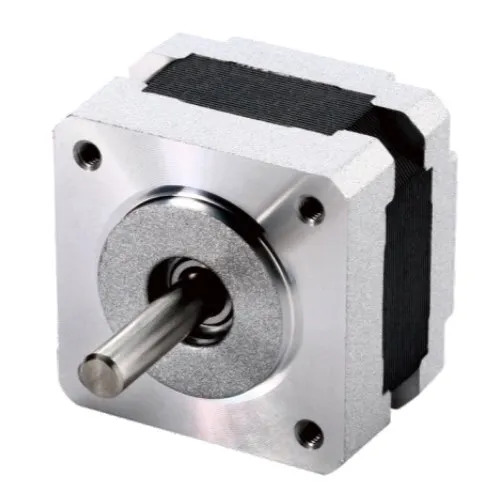
Nema 16 Stepper Motor
Price 1152 INR / Piece
Minimum Order Quantity : 1 Piece
Motor Type : Nema 16
Torque : 0.07 Nm / 0.22 Nm
Product Type : Other, Stepper Motor
Phase : Three Phase
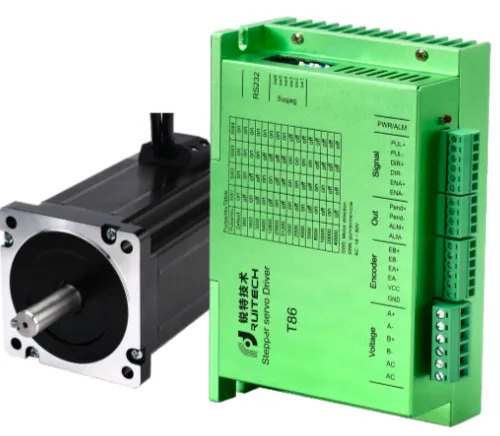
Closed Loop Stepper Motor And Driver
Price 9950 INR / Piece
Minimum Order Quantity : 1 Piece
Motor Type : Closed loop stepper motor & driver
Torque : 0.8 Nm / 3 Nm / 8 Nm
Product Type : Other, Stepper Motor & Driver
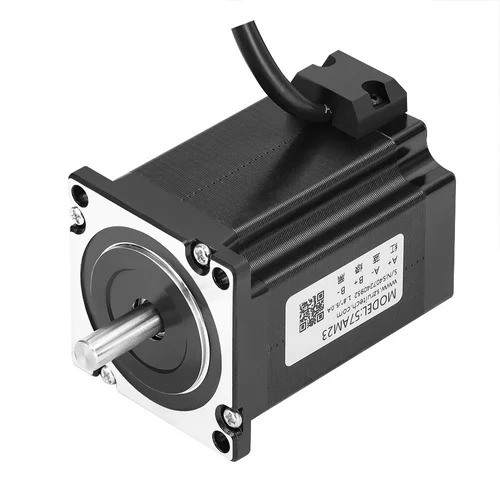
High Torque Hybrid Stepper Motors
Price 7738 INR / Piece
Minimum Order Quantity : 1 Piece
Motor Type : Hybrid Stepper Motor
Torque : 120 Kgcm
Product Type : Other, Stepper Motor
Phase : Other, 2
Bipolar Stepper Motors
Price 2963 INR / Piece
Minimum Order Quantity : 1 Piece
Motor Type : Bipolar
Torque : 4.5 Nm
Phase : Other, 2

GST : 24AANCR5533K1Z1


 Send Inquiry
- Pressure Transmitters
- Stepper Motor
- Rotary Encoder
- Stepper Driver
- AC Drive
- Level Transmitter
- Digital Pressure Gauge
- Ultrasonic Level Sensor
- Pressure Sensor
- RSM Series AC Servo Motor
- PLC Control Panel
- SCADA System
- Laser Displacement Sensor
- Textile Sensor
- Proximity Sensor and Switch
- Label Sensor
- Human Machine Interface
- Photoelectric Sensor
- Servo Motor
- Proximity Sensor & Switch
- Variable Frequency Drive
- Flow Meter
- Flow Measuring Instruments
- Temperature Transmitter
- Level Measurement
- Pressure Measurement
- Temperature Measurement
 Send Inquiry
 Send SMS
Developed and Managed by Infocom Network Private Limited.

