


Call us now
08045812717

 Send Inquiry
Transparent Label Sensor
Price 3000.00 INR/ Unit
MOQ : 01 , , Unit
Transparent Label Sensor Specification
- Sensitivity
- Adjustable via teach-in button or potentiometer
- Mounting Type
- Bracket or DIN rail mountable
- Power Consumption
- < 1.5 W
- Interface
- 3-wire or 4-wire connection
- Measurement Range
- 0.02-2 mm label thickness
- Sensor Type
- Photoelectric (Optical) Sensor
- Application
- Label detection in automated product packaging and labeling applications
- Features
- Fast response time, high sensitivity for transparent objects, compact design, LED status indicator
- IP Rating
- IP65
- Signal Type
- Digital
- Operating Temperature
- -10°C to +60°C
- Wireless
- No
- Response Time
- < 0.5 ms
- Cable Length
- 2 meters (standard)
- Product Type
- Transparent Label Sensor
- Material
- Aluminum Alloy and ABS Plastic
- Input
- 12-24V DC
- Output
- NPN/PNP Open Collector or Relay
- Function
- Detects transparent, semi-transparent, and opaque labels on a continuous web
- Usage
- For precise label detection in packaging machines, labeling lines, and automation systems
- Accuracy
- ±0.1 mm
- Resolution
- 0.01 mm
- Voltage
- 12-24V DC
- Weight
- Approx. 80 g
- Indicator Light
- LED for operation and output status
- Minimum Detectable Label Gap
- 0.5 mm
- Protection Circuitry
- Reverse polarity protection and overload protection
- Ambient Humidity
- 35 to 85% RH
- Control Method
- Manual and auto teach-in options
- Storage Temperature
- -20°C to +80°C
- Enclosure Material
- Industrial ABS & Aluminum
- EMC Compliance
- CE certified
- Switching Frequency
- Max. 1500 Hz
- Housing Dimension
- Approx. 92 x 29 x 33 mm
Transparent Label Sensor Trade Information
- Minimum Order Quantity
- 01 , , Unit
- Supply Ability
- 50 Units Per Week
- Delivery Time
- 3-4 Days
About Transparent Label Sensor
Technical specification
Electrical Connection | M 8 - 4 Pin Connector |
Material | Plastic |
Model Name/Number | XUVE06 |
Passage Width | 3 mm |
Passage Depth | 69 mm |
Packaging Type | Box |
Max Passing Speed of Object | 180 m/min |
Reliable Label Detection for Automation
Engineered for modern packaging and labeling environments, this sensor detects transparent, semi-transparent, and opaque labels on continuous webs with exceptional accuracy and speed. The device features a minimum detectable label gap of 0.5 mm and a resolution of 0.01 mm, supporting highly efficient automated processes.
Durable and Compact Industrial Design
The sensor is constructed from industrial-grade ABS and aluminum alloy, offering both strength and a lightweight (approx. 80 g) form factor. Suitable for harsh conditions, it operates smoothly within a wide temperature range and humidity variation, aided by its IP65-rated enclosure for dust and water ingress protection.
Simple Operation with Advanced Features
User-friendly control options include manual and auto teach-in modes, adjustable sensitivity, and clear LED status indication. Installation is flexible with bracket or DIN rail mounting, and connectivity options enable integration into diverse automation systems. Its robust protection circuitry enhances operational safety.
FAQs of Transparent Label Sensor:
Q: How does the Transparent Label Sensor accurately detect transparent and semi-transparent labels?
A: Utilizing photoelectric (optical) technology, the sensor identifies transparent, semi-transparent, and opaque labels by measuring changes in light transmission, ensuring precision even with difficult-to-detect labels. Its resolution of 0.01 mm and minimum gap detection of 0.5 mm guarantee high reliability in automated labeling processes.Q: What installation options are available for this label sensor?
A: The sensor supports both bracket and DIN rail mounting, providing flexibility for integration into various packaging machines, labeling lines, and automation systems. Its compact design and standard 2-meter cable make it easy to fit in different industrial setups.Q: When should I use manual versus auto teach-in for sensitivity adjustment?
A: Manual teach-in is recommended for applications where specific fine-tuning of sensitivity is required, while auto teach-in simplifies setup by automatically calibrating the sensor for optimal performance during initial installation or label changes. Both methods ensure accurate label detection.Q: Where can this sensor be applied in industrial environments?
A: Primarily used in automated product packaging and labeling machines, the sensor is suitable for environments requiring precise label positioning, such as pharmaceutical, food & beverage, and specialty product lines. Its CE compliance ensures suitability for various regulated spaces.Q: What protection features does the sensor have to safeguard operation?
A: The sensor incorporates reverse polarity and overload protection, preventing damage from incorrect wiring or excessive electrical loads. Its IP65 enclosure further protects against dust and water, which is essential for demanding industrial applications.Q: How does the LED indicator enhance usability of the sensor?
A: The integrated LED indicator provides immediate feedback on operational and output status, allowing operators to monitor sensor activity and troubleshoot issues quickly, ensuring smooth and continuous operation in automated systems.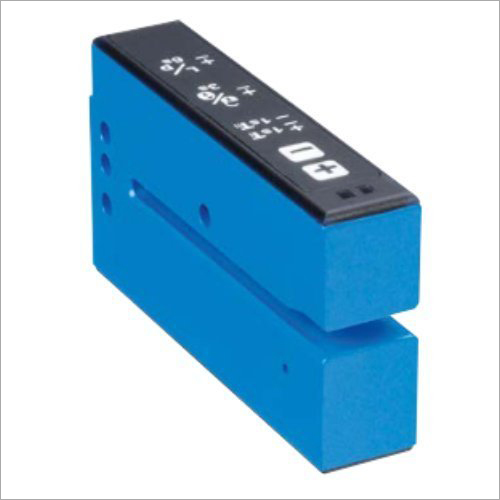
Tell us about your requirement

Price:
Quantity
Select Unit
- 50
- 100
- 200
- 250
- 500
- 1000+
Additional detail
Mobile number
Email

More Products in Label Sensor Category
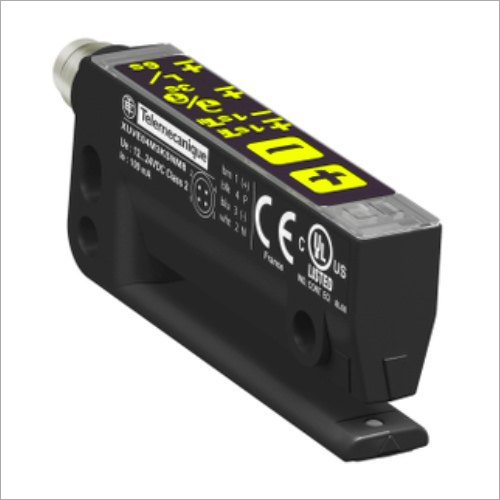
Non Transparent Label Sensor
Price 3000.00 INR / Unit
Minimum Order Quantity : 01 , , Unit
Usage : Automatic labeling and packaging lines
Signal Type : Digital
Product Type : Non Transparent Label Sensor
Output : PNP/NPN, NO/NC relay

RBA OPTISYNC PRIVATE LIMITED
GST : 24AANCR5533K1Z1
GST : 24AANCR5533K1Z1
B/57-60 Satya-2 Industrial Park, Bhuvaladi Road, Kathwada,Ahmedabad - 382430, Gujarat, India
Phone :08045812717

 Send Inquiry
- Pressure Transmitters
- Stepper Motor
- Rotary Encoder
- Stepper Driver
- AC Drive
- Level Transmitter
- Digital Pressure Gauge
- Ultrasonic Level Sensor
- Pressure Sensor
- RSM Series AC Servo Motor
- PLC Control Panel
- SCADA System
- Laser Displacement Sensor
- Textile Sensor
- Proximity Sensor and Switch
- Label Sensor
- Human Machine Interface
- Photoelectric Sensor
- Servo Motor
- Proximity Sensor & Switch
- Variable Frequency Drive
- Flow Meter
- Flow Measuring Instruments
- Temperature Transmitter
- Level Measurement
- Pressure Measurement
- Temperature Measurement
 Send Inquiry
 Send SMS
RBA OPTISYNC PRIVATE LIMITED
All Rights Reserved.(Terms of Use)
Developed and Managed by Infocom Network Private Limited.
Developed and Managed by Infocom Network Private Limited.

