


Call us now
08045812717

 Send Inquiry
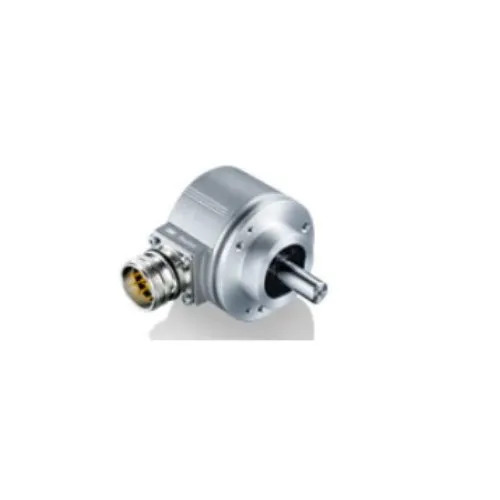
Heavy Duty Rotary Encoder
Price 1000.00 INR/ Unit
Heavy Duty Rotary Encoder Specification
- Power Factor
- 0.98
- Insulation Material
- Polyamide
- Overheating Protection
- YES
- Mounting Type
- Flange Mount
- Connector Type
- M23 Circular Connector
- Surface Finish
- Anodized
- Efficiency
- High
- Operating Temperature
- -20°C to +80°C
- Humidity %
- 0-95% RH
- Shape
- Round
- IP Rating
- IP65
- Feature
- Heavy Duty, Vibration Resistant, High Accuracy
- Product Type
- Heavy Duty Rotary Encoder
- Application
- Industrial Machinery, Automation, Robotics
- Protection Level
- Sealed
- Frequency (MHz)
- 50-60
- Rated Voltage
- 24V DC
- Energy Consumption
- Low
- Output Type
- Incremental, Digital
- Color
- Black & Silver
- Dimension (L*W*H)
- 105 x 90 x 90 mm
- Weight
- 2.8 kg
- Size
- Standard
- Input Voltage
- 5-30V DC
- Phase
- Three Phase
- Connection Type
- Cable Gland
- Material
- Aluminum Alloy
- No Of Poles
- 3
- Storage Temperature
- -25°C to +100°C
- Encoder Type
- Optical Rotary Encoder
- Housing Material
- Die-cast Aluminum
- Cable Length
- 2 meters
- Response Time
- <1 ms
- Output Signal
- A/B/Z Channels
- Shock Resistance
- 1000 m/s², 6 ms
- Resolution
- 1-5000 PPR (Pulses Per Revolution)
- Max Shaft Load
- 50 N Axial, 80 N Radial
- Vibration Resistance
- Up to 100 m/s² (10-2,000 Hz)
- RoHS Compliance
- Yes
- Shaft Diameter
- 10 mm
- Bearing Life
- >10^9 rotations
Heavy Duty Rotary Encoder Trade Information
- Minimum Order Quantity
- 01 , , Unit
- Supply Ability
- 1000 Units Per Month
- Delivery Time
- 7 Days
About Heavy Duty Rotary Encoder
Technical specification
Connection | Cable. / connector |
Brand | Baumer |
Shaft Diameter | 4 mm to 12 mm for solid & 7mm to 50 mm for hollow |
Voltage | 210 V |
Signal | Pushpull / line driver. / sincos / TTL (RS422) (Output) |
Model | HOG / POG / OG |
Flange Size | 48 to 160 mm |
Exceptional Performance in Industrial Settings
Designed for heavy-duty tasks, this rotary encoder supports up to 5000 pulses per revolution and can endure rigorous axial and radial loads. Its robust die-cast aluminum housing and IP65 sealing enable consistent operation even in harsh industrial environments, making it ideal for factories, automation systems, and robotics. Reliable feedback channels ensure precise control and monitoring in every application.
High-Resilience Design and Longevity
Withstanding vibrations up to 100 m/s and shocks of 1000 m/s, the encoder maintains accuracy under tough conditions. Its bearing life exceeds one billion rotations, complemented by a wide operating and storage temperature range, ensuring dependable performance year after year. The anodized surface finish adds durability, while the cable gland and M23 circular connector provide secure connections.
FAQs of Heavy Duty Rotary Encoder:
Q: How is the Heavy Duty Rotary Encoder installed in industrial machinery?
A: The rotary encoder is designed for easy installation using a flange mount and a standard cable gland connection. Simply secure the encoder onto the machine frame, connect the M23 circular connector, and route the 2-meter cable for seamless integration into your control system.Q: What are the benefits of using A/B/Z channel output signals in automation?
A: A/B/Z channel signals provide incremental digital feedback, allowing precise position and speed detection. This enables accurate control in automation and robotics, supports shaft referencing via the Z pulse, and facilitates efficient monitoring and diagnostics.Q: Where can this encoder be effectively utilized?
A: This encoder is ideal for use in industrial machinery, automated production lines, and robotics. Its vibration and shock resistance make it suitable for demanding settings where reliable and accurate feedback is crucial, such as factories and process automation environments.Q: What is the typical process for wiring and connecting the encoder?
A: Wiring involves connecting the encoders cable to your control unit via the M23 circular connector, ensuring signal integrity. The standard 2-meter cable length provides flexibility, and sealed construction minimizes contamination, supporting fast and reliable data transmission.Q: Does the encoder offer protection against environmental hazards?
A: Yes, the die-cast aluminum housing, flange mount, and IP65 rating ensure the encoder is sealed against dust, moisture, and splashing water. With vibration resistance up to 100 m/s and shock resistance at 1000 m/s, the design ensures durability in harsh industrial conditions.Q: When should the encoder be maintained or replaced?
A: Routine inspection is recommended, especially in high-usage environments, but the encoders bearing life exceeds one billion rotations, reducing the frequency of maintenance. Replacement should be considered if feedback accuracy drops or after prolonged exposure to extreme mechanical loads.Q: What advantages does RoHS compliance offer to end users?
A: RoHS compliance ensures the encoder is free from hazardous substances, making it safer for both operators and the environment. This meets international safety standards and enhances sustainability in industrial operations.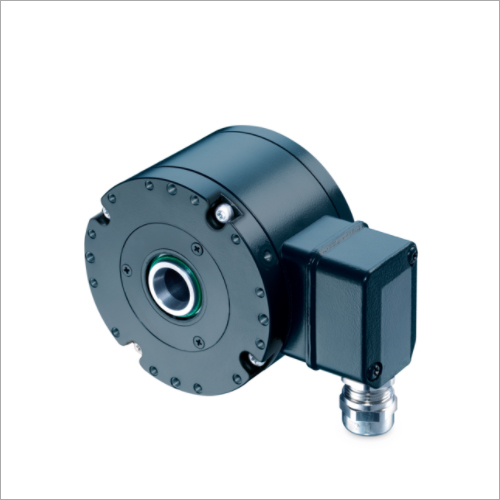

Price:
- 50
- 100
- 200
- 250
- 500
- 1000+

More Products in Rotary Encoder Category
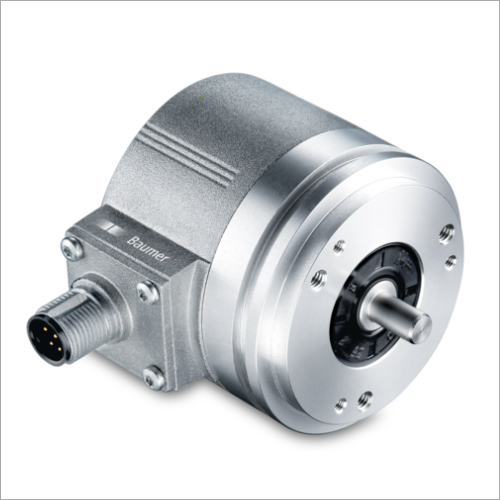
Solid Shaft Encoder
Price 1000.00 INR / Unit
Minimum Order Quantity : 01 , , Unit
Connection Type : Cable/Lead Wire
Output Type : Incremental / Quadrature
Size : Diameter 50 mm
Operating Temperature : 20C to +80C
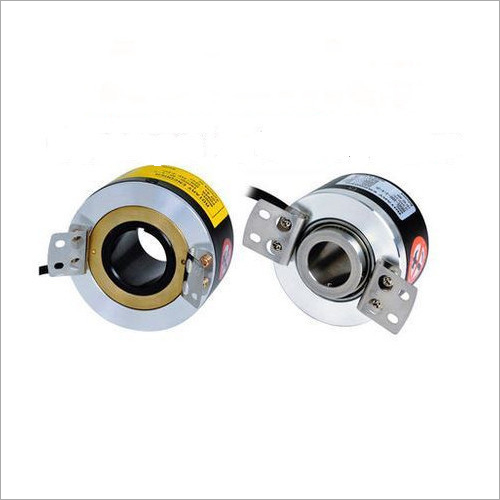
Hollow Shaft Rotary Encoder
Price 1000.00 INR / Unit
Minimum Order Quantity : 01 , , Unit
Connection Type : Cable Gland/Connector
Output Type : Incremental / Quadrature
Size : 50 mm diameter
Operating Temperature : 20C to +85C
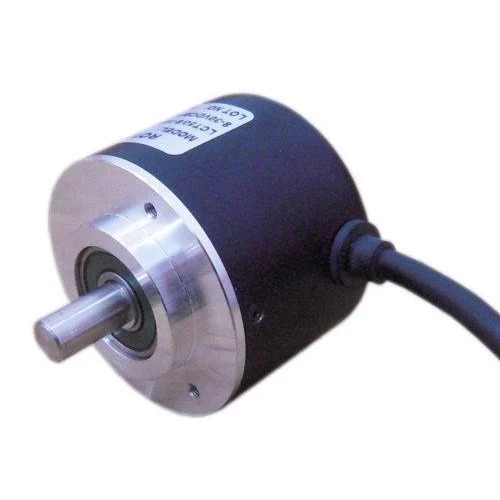
Rotary Encoder
Price 3900 INR / Piece
Minimum Order Quantity : 1 Piece
Connection Type : Radial & Axial cable / connector
Output Type : TTL/RS422 or HTL/Pushpull
Size : Shaft Diameter: 6, 8, 10, 15 mm
EIL580-SC Solid Shaft Encoder
Price 6000 INR / Piece
Minimum Order Quantity : 1 Piece
Connection Type : Cable
Output Type : Incremental
Size : 58 mm
Operating Temperature : 40+85 deg C

GST : 24AANCR5533K1Z1


 Send Inquiry
- Pressure Transmitters
- Stepper Motor
- Rotary Encoder
- Stepper Driver
- AC Drive
- Level Transmitter
- Digital Pressure Gauge
- Ultrasonic Level Sensor
- Pressure Sensor
- RSM Series AC Servo Motor
- PLC Control Panel
- SCADA System
- Laser Displacement Sensor
- Textile Sensor
- Proximity Sensor and Switch
- Label Sensor
- Human Machine Interface
- Photoelectric Sensor
- Servo Motor
- Proximity Sensor & Switch
- Variable Frequency Drive
- Flow Meter
- Flow Measuring Instruments
- Temperature Transmitter
- Level Measurement
- Pressure Measurement
- Temperature Measurement
 Send Inquiry
 Send SMS
 Call Me Free
Developed and Managed by Infocom Network Private Limited.

