


Call us now
08045812717

 Send Inquiry
Laser Displacement Sensor
Price 20000.00 INR/ Unit
MOQ : 01 , , Unit
Laser Displacement Sensor Specification
- IP Rating
- IP65
- Response Time
- 1 ms
- Sensor Type
- Class II Laser
- Application
- Industrial Automation, Quality Control, Robotics, Electronic Assembly
- Signal Type
- Analog & Digital
- Interface
- RS232, RS485, Analog Outputs
- Features
- Compact Size, High Speed Response, Durable Construction
- Wireless
- No
- Operating Temperature
- 0°C to +50°C
- Sensitivity
- High Sensitivity Laser Detector
- Cable Length
- 2 m
- Mounting Type
- Standard Bracket Mount
- Power Consumption
- Max. 2.5W
- Measurement Range
- 20 mm to 200 mm
- Product Type
- Laser Displacement Sensor
- Material
- Aluminum Alloy Housing
- Input
- DC Power Input
- Output
- Analog (4-20mA/0-10V), Digital (RS232/RS485)
- Function
- Non-contact Distance, Position and Profile Measurement
- Usage
- Precision Measurement for Automation, Inspection, Positioning
- Accuracy
- ±0.03 mm
- Resolution
- 0.01 mm
- Voltage
- 12-24V DC
- Weight
- Approx. 120g
- Response Frequency
- 1000 Hz
- Laser Safety Class
- Class II (IEC 60825-1)
- Shock/Vibration Resistance
- 10 G / 2 G
- Storage Temperature
- -20°C to +70°C
- Housing Protection
- Corrosion Resistant Housing
- Linearity
- ±0.05% of F.S.
- Spot Size
- Approximately 0.5 mm (Typical)
- Light Source
- Semiconductor Laser Diode
- Wavelength
- 650 nm Visible Red Laser
- Ambient Light Immunity
- Up to 10,000 lux
Laser Displacement Sensor Trade Information
- Minimum Order Quantity
- 01 , , Unit
- Supply Ability
- 50 Units Per Week
- Delivery Time
- 3-4 Days
About Laser Displacement Sensor
Technical specification
Adujstment range by | Teach in function |
Usage/Application | Industrial |
Accuracy | 0.1 % |
Operating Temperature | -10 To 40 Degree C |
Supply Voltage | 10-30 V dc |
Resolution | up to 2 micron |
Signal | 4-20 mA / 0-10 vdc / switching (Output) |
Response Timing | 0.9 ms |
Unmatched Precision and Reliability
Engineered for accuracy, the sensors 0.03 mm accuracy and 0.05% linearity enable reliable measurements vital for industrial automation, robotics, and quality control. The compact aluminum alloy construction ensures durability even in demanding conditions, fortified by an IP65 rating and strong shock and vibration resistance.
High-Speed and Flexible Connectivity
Boasting a 1000 Hz response frequency and a swift 1 ms response time, the sensor integrates seamlessly into fast-paced automation environments. Its versatile output optionsanalog (4-20mA/0-10V) and digital (RS232/RS485)allow compatibility with diverse control and monitoring systems in Indias advanced manufacturing sectors.
Simple Installation and Adaptability
The sensor comes standard with bracket mounting and a 2 m cable, facilitating straightforward setup in various industrial spaces. Its corrosion-resistant housing supports long-term performance, while the broad input voltage range (12-24V DC) and high ambient light immunity ensure stable operation in challenging conditions.
FAQs of Laser Displacement Sensor:
Q: How does the laser displacement sensor measure distance and position without contact?
A: This sensor uses a 650 nm visible red semiconductor laser diode to emit a focused beam. By analyzing the reflected light, it determines the distance, position, or profile of a target object precisely, enabling non-contact measurement crucial for delicate or moving parts.Q: What applications are ideal for this sensor in industrial environments?
A: The sensor is suited for automation, quality control, robotics, electronic assembly, and inspection tasks. Its high sensitivity and accuracy ensure reliable measurements for positioning, profile verification, and precise part identification in manufacturing and assembly lines.Q: When should I consider using a sensor with a response frequency of 1000 Hz?
A: A 1000 Hz response frequency is advantageous in fast-paced, high-speed automation systems where rapid detection and measurement are essential. It supports real-time monitoring and control tasks, minimizing error and improving process efficiency.Q: Where can the sensor be installed, considering its durability and protection features?
A: With IP65 protection, corrosion-resistant aluminum alloy housing, and shock/vibration resistance, the sensor can be installed in challenging industrial environments, including factories, assembly areas, and robotics stations where exposure to dust, moisture, and vibrations is common.Q: What is the process for integrating this sensor into existing equipment?
A: Integration is straightforward with the standard bracket mount and 2 m cable. The sensors dual signal outputsanalog and digitalallow connection to PLCs, controllers, or monitoring systems using RS232/RS485 interfaces or analog signals, ensuring flexible system compatibility.Q: How does the sensor benefit quality control and automation in manufacturing?
A: Its high resolution (0.01 mm) and accuracy (0.03 mm), combined with fast response, enable precise monitoring and adjustments on production lines. This ensures products meet stringent standards and reduces rework and waste, boosting overall manufacturing efficiency.Q: Is the sensor safe to use around operators, and what safety class does it belong to?
A: The sensor is classified as Class II under IEC 60825-1, meaning it is considered eye-safe for accidental exposure, with visible laser output. Standard safety practices should still be followed to prevent prolonged direct exposure to the laser beam.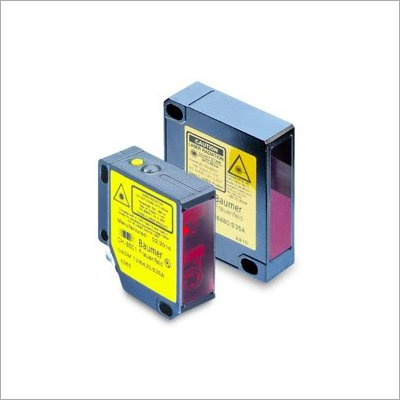
Tell us about your requirement

Price:
Quantity
Select Unit
- 50
- 100
- 200
- 250
- 500
- 1000+
Additional detail
Mobile number
Email


RBA OPTISYNC PRIVATE LIMITED
GST : 24AANCR5533K1Z1
GST : 24AANCR5533K1Z1
B/57-60 Satya-2 Industrial Park, Bhuvaladi Road, Kathwada,Ahmedabad - 382430, Gujarat, India
Phone :08045812717

 Send Inquiry
- Pressure Transmitters
- Stepper Motor
- Rotary Encoder
- Stepper Driver
- AC Drive
- Level Transmitter
- Digital Pressure Gauge
- Ultrasonic Level Sensor
- Pressure Sensor
- RSM Series AC Servo Motor
- PLC Control Panel
- SCADA System
- Laser Displacement Sensor
- Textile Sensor
- Proximity Sensor and Switch
- Label Sensor
- Human Machine Interface
- Photoelectric Sensor
- Servo Motor
- Proximity Sensor & Switch
- Variable Frequency Drive
- Flow Meter
- Flow Measuring Instruments
- Temperature Transmitter
- Level Measurement
- Pressure Measurement
- Temperature Measurement
 Send Inquiry
 Send SMS
RBA OPTISYNC PRIVATE LIMITED
All Rights Reserved.(Terms of Use)
Developed and Managed by Infocom Network Private Limited.
Developed and Managed by Infocom Network Private Limited.

