


Call us now
08045812717

 Send Inquiry
Cylindrical Photoelectric Sensor
Price 1150.00 INR/ Unit
Cylindrical Photoelectric Sensor Specification
- Wireless
- No
- IP Rating
- IP67
- Application
- Object Sensing in Industrial Environments
- Mounting Type
- Threaded (M18) with Lock Nut
- Power Consumption
- <1.5 W
- Signal Type
- Digital
- Features
- Short Circuit Protection, Reverse Polarity Protection
- Measurement Range
- 5 mm to 2 m
- Sensitivity
- Adjustable (via potentiometer)
- Sensor Type
- Photoelectric
- Response Time
- <1 ms
- Interface
- 3-wire, M12 Connector
- Cable Length
- 2 meters
- Operating Temperature
- -25C to +70C
- Product Type
- Cylindrical Photoelectric Sensor
- Material
- ABS Plastic & Stainless Steel
- Input
- 10-30V DC
- Output
- NPN/PNP, NO/NC
- Function
- Object Detection
- Usage
- Industrial Automation, Conveyor Systems
- Accuracy
- 2 mm
- Resolution
- 0.5 mm
- Voltage
- 12-24V DC
- Weight
- 60 g
- Vibration Resistance
- 10-55 Hz, Double Amplitude 1.5 mm
- Storage Temperature
- -40C to +80C
- Ambient Light Immunity
- Up to 10,000 Lux (Sunlight)
- Repeatability
- <0.5 mm
- Shock Resistance
- 500 m/s (Approx. 50G) for 3 Times Each in X, Y, Z Directions
- Current Consumption
- 40mA
- Max Load Current
- 100mA
- Housing Diameter
- 18 mm (M18)
- Mechanical Protection
- Reinforced Housing
- Control Output
- Open Collector
- Light Source
- Red LED, Infrared LED
- Detection Method
- Diffuse Reflective
- Compliance
- CE, RoHS
- Lens Material
- Polycarbonate
Cylindrical Photoelectric Sensor Trade Information
- Minimum Order Quantity
- 01 , , Unit
- Supply Ability
- 50 Units Per Week
- Delivery Time
- 3-4 Days
About Cylindrical Photoelectric Sensor
Technical specification
Output function | Light ON / Dark On selectable |
Shape | Cylindrical M18 |
Sensing Distance | 80/300/800 mm |
Power Supply | 10-30 Vdc |
Material | Plastic |
Type | Photoelectric Sensor |
Brand | Baumer |
Usage/Application | Object Detection |
Model Name/Number | OR18 |
Output signal | PNP / NPN |
Precision Object Detection for Industrial Automation
Designed for high-performance industrial applications, this sensor delivers accurate object sensing on conveyor systems and automated lines. Its diffuse reflective method and adjustable sensitivity support versatile detection tasks, even in environments with high ambient light up to 10,000 Lux. Operators benefit from reduced downtime and increased reliability, thanks to the sensors rapid response, robust mechanical protection, and advanced shock resistance specifications.
Durability for Harsh Operating Environments
With an IP67 rating and reinforced ABS plastic and stainless steel housing, this sensor withstands water, dust, strong vibrations, and shock loads up to 50G. Its polycarbonate lens resists impact and wear, while the wide operating temperature range ensures reliability from -25C to +70C. These features make it ideal for tough industrial settings, providing long-term performance and minimized maintenance requirements.
Flexible Installation and Easy Integration
Featuring threaded M18 mounting with included lock nut, a 2-meter cable, and a 3-wire M12 interface, installation is swift and straightforward. The sensor offers both NPN/PNP control outputs in NO/NC configurations and includes short-circuit and reverse polarity protection, enabling safer connectivity. Its compliance with CE and RoHS standards further simplifies deployment for manufacturers, service providers, and suppliers across Indian industries.
FAQs of Cylindrical Photoelectric Sensor:
Q: How does the cylindrical photoelectric sensor detect objects?
A: This sensor uses a diffuse reflective detection method, whereby its red or infrared LED emits light towards an object. The sensor then detects the reflection of this light from the objects surface, identifying its presence or absence and generating a digital output signal.Q: What environments can this photoelectric sensor operate in?
A: The sensor is suited for a wide range of industrial applications, including manufacturing, automation, and conveyor systems. With an IP67 rating, reinforced housing, and tolerance for high ambient light (up to 10,000 Lux), vibration, and shock, it performs reliably even in harsh or outdoor environments.Q: When should I use adjustable sensitivity on this sensor?
A: Adjustable sensitivity, set via the built-in potentiometer, allows for optimal detection in diverse scenarios. Use this adjustment when target objects have varying colors, shapes, or reflectivity, or when working at different detection distances, ensuring precise sensing and minimal false triggers.Q: Where are these sensors typically installed?
A: These sensors are commonly mounted on industrial conveyors, automated sorting machines, and robotic arms. The threaded M18 design with lock nut and 2-meter cable facilitates secure and flexible placement in various industrial environments, including settings found across India.Q: What is required for integrating this sensor into an automation system?
A: Integration is straightforward due to its 3-wire, M12 connector, and compatibility with 10-30V DC power supplies. The sensor provides NPN/PNP outputs (NO/NC), and includes protections against short circuits and reverse polarity, making it safe and easy to pair with PLCs or control units.Q: How does using this sensor benefit industrial operations?
A: This sensor improves process accuracy and reliability, reducing errors in object sensing and supporting high-speed operations with a <1 ms response time. Its robust design minimizes downtime, while precise repeatability (<0.5 mm) ensures consistency in automated tasks.Q: What certifications does this photoelectric sensor have?
A: The sensor is CE and RoHS compliant, ensuring it meets essential safety, health, and environmental standards required for industrial installations in India.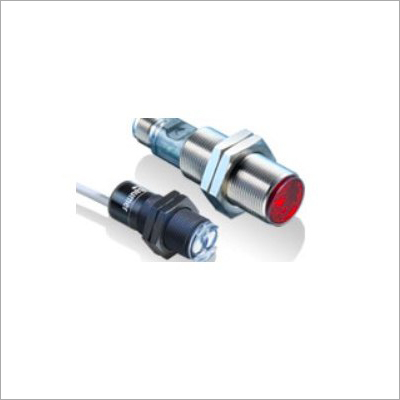

Price:
- 50
- 100
- 200
- 250
- 500
- 1000+

More Products in Photoelectric Sensor Category
Retro Reflective Photoelectric Sensor
Price 1150.00 INR / Unit
Minimum Order Quantity : 01 , , Unit
Sensor Type : Photoelectric Retro Reflective
Material : ABS Plastic, Polycarbonate Lens
Usage : Industrial Automation, Conveyor Systems
Product Type : Retro Reflective Photoelectric Sensor
Diffuse Photoelectric Sensor
Price 1150.00 INR / Unit
Minimum Order Quantity : 01 , , Unit
Sensor Type : Infrared Diffuse Reflective
Material : ABS Plastic Housing
Usage : Industrial Automation, Conveyor Systems, Packaging, Robotics
Product Type : Diffuse Photoelectric Sensor
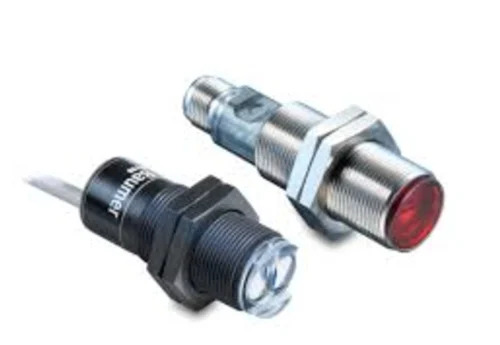
Cylindrical Photoelectric Sensor
Price 1500 INR / Piece
Minimum Order Quantity : 1 Piece
Sensor Type : Cylindrical Photoelectric
Material : Plastic
Usage : Object Detection
Product Type : Photoelectric Sensor
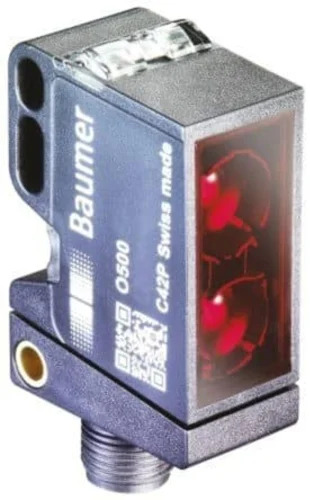
Retro Reflective Photoelectric Sensor
Price 1700 INR / Piece
Minimum Order Quantity : 1 Piece
Sensor Type : Photoelectric
Material : Plastic
Usage : Industrial Automation
Product Type : Retro Reflective Photoelectric Sensor

GST : 24AANCR5533K1Z1


 Send Inquiry
- Pressure Transmitters
- Stepper Motor
- Rotary Encoder
- Stepper Driver
- AC Drive
- Level Transmitter
- Digital Pressure Gauge
- Ultrasonic Level Sensor
- Pressure Sensor
- RSM Series AC Servo Motor
- PLC Control Panel
- SCADA System
- Laser Displacement Sensor
- Textile Sensor
- Proximity Sensor and Switch
- Label Sensor
- Human Machine Interface
- Photoelectric Sensor
- Servo Motor
- Proximity Sensor & Switch
- Variable Frequency Drive
- Flow Meter
- Flow Measuring Instruments
- Temperature Transmitter
- Level Measurement
- Pressure Measurement
- Temperature Measurement
 Send Inquiry
 Send SMS
 Call Me Free
Developed and Managed by Infocom Network Private Limited.

