


Call us now
08045812717

 Send Inquiry
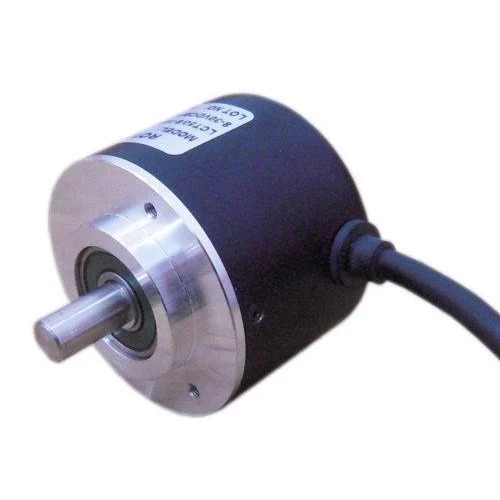
Rotary Encoder
Price 3900 INR/ Unit
Rotary Encoder Specification
- Product Type
- Rotary Encoder
- Frequency (MHz)
- 50 Hertz (HZ)
- Rated Voltage
- 220 Volt (V)
- Warranty
- 1 Year
- Color
- Blue
- Size
- Standard
- Material
- Steel
Rotary Encoder Trade Information
- Minimum Order Quantity
- 01 , , Unit
- Supply Ability
- 50 Units Per Week
- Delivery Time
- 3-4 Days
About Rotary Encoder
Rotary encoders offered by R B Automation are suited for many applications in need of monitoring or control, or both. These can work with the assistance of several mechanical systems, such as industrial controls, photographic lenses, computer input devices,robotics, trackballs, rotating radar platforms etc. Rotary encoders are noted as the high-quality position sensor that can assist in the determination of the angular position of a turning shaft. These are made to ensure high level of functionality.
Technical specification
Body Dia | 50 mm |
Shaft Diameter | 6, 8, 10, 15 mm |
Power | 5 VDC, 8.30 VDC, 4.75, 30 VDC |
Output signal | PNP / NPN / push pull / line driver |
Output | TTL/RS422 or HTL/Pushpull |
Number of. channel | 3 / 6 |
Electrical Connection | Radial & Axial cable / connector |
Robust Material and Engineering
Constructed with premium steel, this rotary encoder stands out for its durability and resistance to wear and tear. Its solid build ensures dependable operation in challenging industrial environments, making it suitable for frequent use.
Tailored for Indian Industry Needs
Operating at 220 V and 50 Hz frequency, this encoder aligns perfectly with Indian electrical standards. Whether you are an importer, manufacturer, or supplier, its compatibility ensures smooth integration into your existing systems.
Warranty and Support Guarantee
A comprehensive one-year warranty accompanies each encoder, underlining our commitment to quality and customer satisfaction. Support is readily available for troubleshooting, repairs, or replacements within the warranty period.
FAQ's of Rotary Encoder:
Q: How does a rotary encoder operate in industrial environments?
A: A rotary encoder detects the position or rotation of a shaft and translates it into electrical signals. In industrial settings, it is used to monitor motion, speed, or direction, facilitating precise control of machinery.Q: What are the advantages of using a steel rotary encoder?
A: Using steel in the rotary encoder's construction enhances durability, corrosion resistance, and longevity, making it ideal for demanding environments where mechanical strength is crucial.Q: When should you consider replacing your rotary encoder?
A: It is advisable to replace the encoder if you notice erratic readings, mechanical wear, or after prolonged use, especially beyond the one-year warranty, to ensure continued reliability and accuracy.Q: Where can this rotary encoder be installed?
A: This rotary encoder fits standard-sized mounting systems common in automation, robotics, and process control equipment. It is suitable for a variety of industrial machines requiring precise motion feedback.Q: What is the process for claiming the one-year warranty?
A: To claim the warranty, contact your supplier or service provider with your purchase details and a description of the issue. They will guide you through inspection or possible replacement as per the warranty terms.Q: How should the rotary encoder be used for optimal performance?
A: Ensure the encoder is installed securely, connected to a 220 V / 50 Hz power supply, and operated within its specified load. Regular inspection and proper alignment optimize lifespan and operational accuracy.Q: What benefits does this encoder offer to importers, manufacturers, and service providers in India?
A: With standard specifications, reliable warranty, and robust steel construction, this encoder simplifies procurement, integration, and maintenance for various Indian industrial sectors.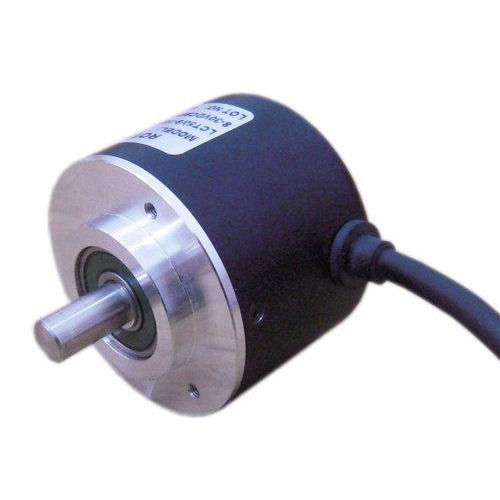

Price:
- 50
- 100
- 200
- 250
- 500
- 1000+

More Products in Rotary Encoder Category
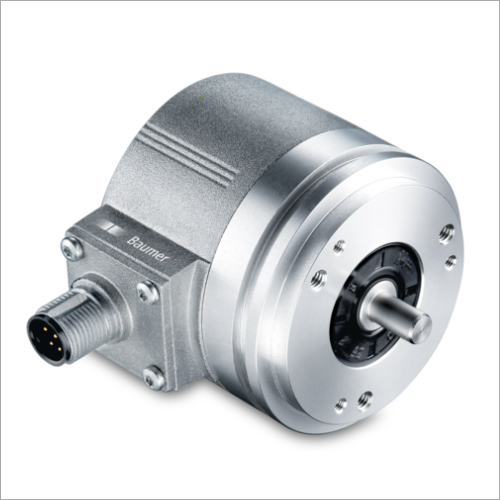
Solid Shaft Encoder
Price 1000.00 INR / Unit
Minimum Order Quantity : 01 , , Unit
Size : Diameter 50 mm
Connection Type : Cable/Lead Wire
Output Type : Incremental / Quadrature
Weight : 250 g
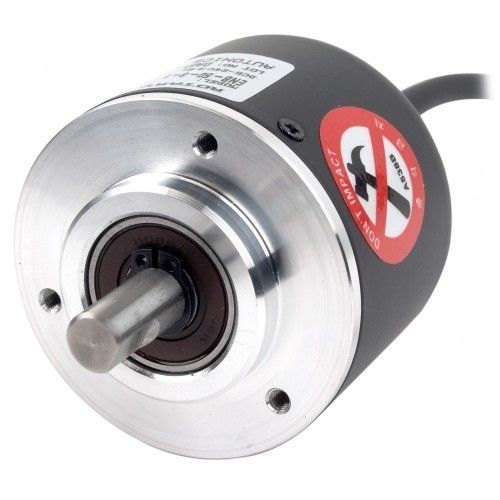
Incremental Encoder
Price 3500 INR / Unit
Minimum Order Quantity : 01 , , Unit
Size : 40 mm body dia
EIL580-SC Solid Shaft Encoder
Price 6000 INR / Piece
Minimum Order Quantity : 1 Piece
Size : 58 mm
Connection Type : Cable
Output Type : Incremental
Weight : 300 gm
Rotary Encoder
Price 3900 INR / Piece
Minimum Order Quantity : 1 Piece
Size : Shaft Diameter: 6, 8, 10, 15 mm
Connection Type : Radial & Axial cable / connector
Output Type : TTL/RS422 or HTL/Pushpull

GST : 24AANCR5533K1Z1


 Send Inquiry
- Pressure Transmitters
- Stepper Motor
- Rotary Encoder
- Stepper Driver
- AC Drive
- Level Transmitter
- Digital Pressure Gauge
- Ultrasonic Level Sensor
- Pressure Sensor
- RSM Series AC Servo Motor
- PLC Control Panel
- SCADA System
- Laser Displacement Sensor
- Textile Sensor
- Proximity Sensor and Switch
- Label Sensor
- Human Machine Interface
- Photoelectric Sensor
- Servo Motor
- Proximity Sensor & Switch
- Variable Frequency Drive
- Flow Meter
- Flow Measuring Instruments
- Temperature Transmitter
- Level Measurement
- Pressure Measurement
- Temperature Measurement
 Send Inquiry
 Send SMS
Developed and Managed by Infocom Network Private Limited.

