


Call us now
08045812717

 Send Inquiry
Communication Based Stepper Driver
Price 2050.00 INR/ Unit
Communication Based Stepper Driver Specification
- Surface Finish
- Anodized
- IP Rating
- IP20
- Shape
- Rectangular
- Feature
- Communication Interface (RS232/RS485/TTL), Microstepping, Anti-Resonance Control
- Insulation Material
- High Grade Composite
- Overheating Protection
- YES
- Mounting Type
- Panel Mounting
- Operating Temperature
- -10°C to +50°C
- Power Factor
- High
- Humidity %
- 5% to 95% RH, Non-Condensing
- Connector Type
- Pluggable Terminal Block
- Efficiency
- Up to 98%
- Product Type
- Communication Based Stepper Driver
- Application
- CNC Machines, Robotics, 3D Printers, Automated Machinery
- Protection Level
- Over Current Protection, Short Circuit Protection
- Frequency (MHz)
- 50-60 MHz
- Rated Voltage
- 24V DC
- Energy Consumption
- Low Power Consumption
- Output Type
- Digital Pulse
- Color
- Black
- Dimension (L*W*H)
- 118 x 75.5 x 34 mm
- Weight
- 320 g
- Input Voltage
- 20-50V DC
- Size
- Compact
- Phase
- Single & Two Phase
- Connection Type
- Screw Terminals
- No Of Poles
- 2
- Material
- Aluminum Alloy & Electronic Components
- Cooling
- Natural Air Cooled
- Software Compatibility
- Easy Software Integration through Communication Protocols
- Supported Step Angle
- Full Step to 1/256 Microstep
- Control Signal Type
- Pulse/Direction
- Storage Temperature
- -20°C to +70°C
- Response Time
- <2 ms
- LED Indicators
- Power, Run, Fault
- Error Detection
- Self-Diagnosis with Fault Output
- Isolation
- Optical Isolation for Signal Inputs
- Input Signal Voltage
- 3.3V/5V Compatible
- Load Capacity
- Up to 3 Nm Stepper Motor
- Communication Protocols
- Supports RS232, RS485, TTL UART
- Vibration Compensation
- Integrated Anti-Resonance Technology
- Motor Current Output
- 0.5A to 4.0A (Adjustable)
Communication Based Stepper Driver Trade Information
- Minimum Order Quantity
- 01 , , Unit
- Supply Ability
- 100 Units Per Month
- Delivery Time
- 3-4 Days
About Communication Based Stepper Driver
Technical specification
| Communication | RS 485 protocol |
| Input Phase | Three Phase |
| Usage/Application | Industrial |
| Brand | Rtelligent |
| Model Name/Number | NT60 |
| Frequency | 50/60 Hz |
| Warranty | 1 Year |
| Power supply | 24-48 V dc |
| Current rating | 5 A |
Advanced Motion Control
This driver supports a wide range of step angles from full step to 1/256 microstepping, enabling precise and customizable movement for complex automation requirements. Its adjustable motor current output (0.5A4.0A) and anti-resonance technology ensure smooth operation with minimal vibration, making it ideal for high-performance setups.
Versatile Communication & Integration
Featuring RS232, RS485, and TTL UART protocols, the stepper driver can be easily integrated into various control systems. LED indicators for power, run, and fault status simplify monitoring, while optical isolation assures signal integrity. Its compatibility with both 3.3V and 5V input signals further expands system interoperability.
Built-In Safety & Reliability
Engineered for durability, this stepper driver includes over current and short circuit protection, self-diagnosis with fault output, and natural air cooling. Its aluminum alloy construction, high insulation materials, and IP20 rating make it suitable for demanding industrial environments, while maintaining peak efficiency and low energy consumption.
FAQs of Communication Based Stepper Driver:
Q: How can the stepper driver be integrated with different control systems?
A: The stepper driver supports RS232, RS485, and TTL UART communication protocols, allowing it to connect with a wide range of controllers and PLCs. Its compatibility with 3.3V and 5V input signals further simplifies integration into both modern and legacy automation systems.Q: What are the benefits of using anti-resonance technology in this stepper driver?
A: Integrated anti-resonance technology reduces vibration and instability during motor operation, resulting in smoother motion, increased positioning accuracy, and extended lifespan of both the motor and mechanical components connected to it.Q: Where is this stepper driver most suitable for use?
A: This driver is ideal for applications requiring precise motion control such as CNC machines, robotics, 3D printers, and automated machinery. Its robust protection features and reliable communication interfaces make it suitable for industrial environments.Q: What process is involved in setting the motor current output?
A: The motor current can be adjusted from 0.5A to 4.0A using the drivers onboard controls or through software integration via supported protocols. This allows users to optimize performance according to motor specifications and application requirements.Q: When does the self-diagnosis and fault output feature activate?
A: The self-diagnosis system continuously monitors for faults such as over-current or short circuits. When a fault is detected, the relevant LED indicator illuminates and the fault output is triggered, helping users respond quickly to maintain system safety.Q: How can users benefit from the optical isolation in signal inputs?
A: Optical isolation protects the driver and control system from electrical noise and surges, ensuring reliable signal transmission and minimizing the risk of communication errors or equipment damage.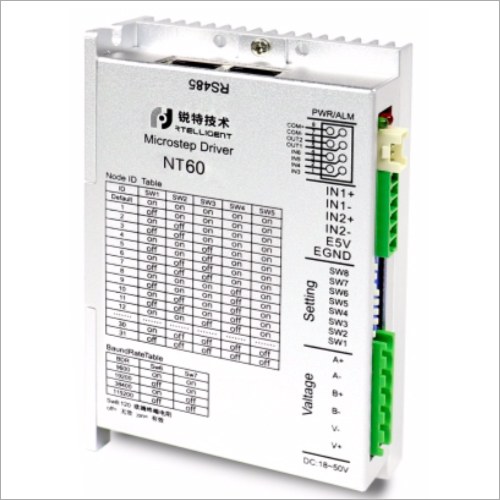

Price:
- 50
- 100
- 200
- 250
- 500
- 1000+

More Products in Stepper Driver Category
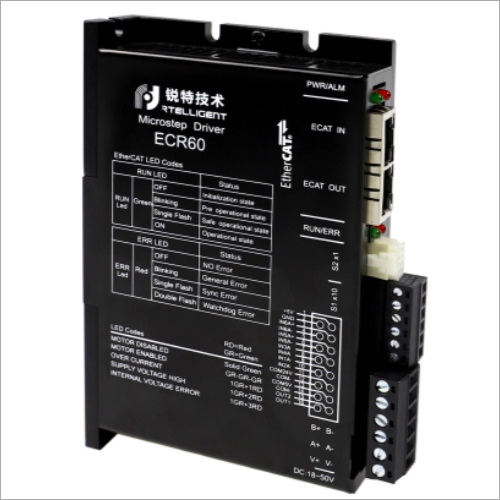
Ether CAT Based Stepper Driver
Price 2050.00 INR / Unit
Minimum Order Quantity : 01 , , Unit
Product Type : Ether CAT Based Stepper Driver
Application : Industrial Automation, Motion Control Systems
Color : Silver & Black
Phase : Single Phase
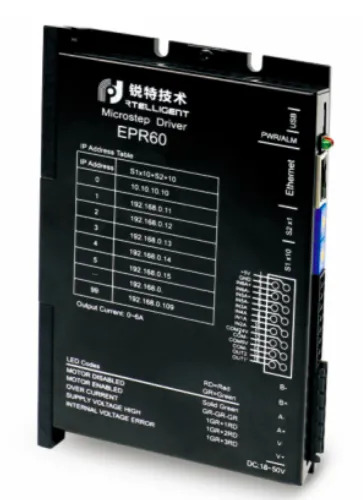
EPR Series Ethernet Based Stepper Driver
Price 7225 INR / Piece
Minimum Order Quantity : 1 Piece
Product Type : Ethernet Based Stepper Driver
Application : Industrial Automation
Color : Black
Phase : Two Phase
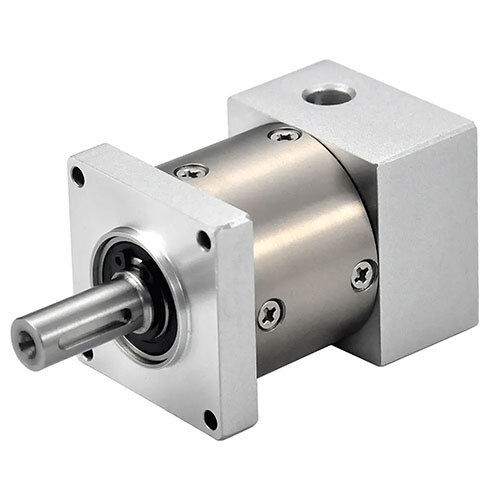
Reducer For Stepper Motor
Price 7600 INR / Piece
Minimum Order Quantity : 1 Piece
Product Type : Reducer For Stepper Motor
Application : Industrial
Color : Silver
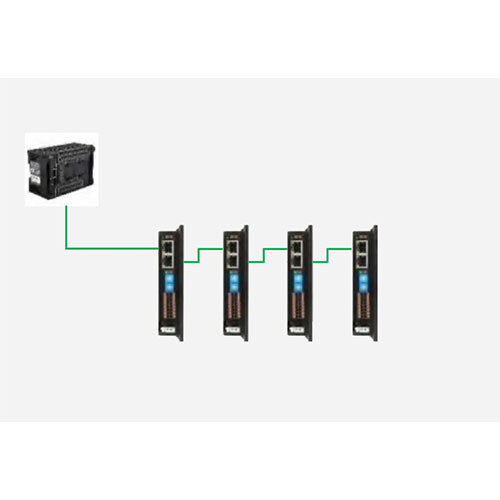
EtherCAT Servo system (ECT60)
Price 380.0 INR / Piece
Minimum Order Quantity : 1 Piece
Product Type : EtherCAT Servo system (ECT60)
Application : Industrial
Color : Black

GST : 24AANCR5533K1Z1


 Send Inquiry
- Pressure Transmitters
- Stepper Motor
- Rotary Encoder
- Stepper Driver
- AC Drive
- Level Transmitter
- Digital Pressure Gauge
- Ultrasonic Level Sensor
- Pressure Sensor
- RSM Series AC Servo Motor
- PLC Control Panel
- SCADA System
- Laser Displacement Sensor
- Textile Sensor
- Proximity Sensor and Switch
- Label Sensor
- Human Machine Interface
- Photoelectric Sensor
- Servo Motor
- Proximity Sensor & Switch
- Variable Frequency Drive
- Flow Meter
- Flow Measuring Instruments
- Temperature Transmitter
- Level Measurement
- Pressure Measurement
- Temperature Measurement
 Send Inquiry
 Send SMS
Developed and Managed by Infocom Network Private Limited.

