


Call us now
08045812717

 Send Inquiry
Ethernet Based Stepper Driver
Price 2050.00 INR/ Unit
Ethernet Based Stepper Driver Specification
- Connector Type
- Ethernet RJ45, Screw Terminal
- Efficiency
- >90%
- Feature
- Programmable, High Precision, Micro-stepping, LED Status Indicators
- Mounting Type
- Panel Mount, DIN Rail
- Humidity %
- 10% to 85%, Non-condensing
- Overheating Protection
- Yes, Inbuilt
- Power Factor
- 0.95
- Shape
- Rectangular
- Surface Finish
- Powder Coated
- IP Rating
- IP20
- Operating Temperature
- 0°C to 50°C
- Insulation Material
- Fiberglass PCB
- Product Type
- Ethernet Based Stepper Driver
- Application
- CNC Machines, Automation Equipment, Robotics, 3D Printers
- Protection Level
- Overcurrent, Overvoltage, Short Circuit Protection
- Frequency (MHz)
- 50-60
- Rated Voltage
- 24V DC
- Energy Consumption
- Low Power Consumption
- Output Type
- Stepper Motor Output
- Color
- Black & Green
- Dimension (L*W*H)
- 147 mm x 97 mm x 40 mm
- Weight
- 450 g
- Phase
- 2 Phase
- Size
- Standard
- Input Voltage
- 24V-48V DC
- No Of Poles
- 4
- Material
- Aluminum, ABS Plastic
- Connection Type
- Ethernet (RJ45), Terminal Block
- Microstep Resolution
- Up to 256 microsteps per step
- Cooling Method
- Natural Air Cooling
- Compatible Motors
- NEMA 17, 23, 34 Stepper Motors
- Control Mode
- Pulse/Direction, CW/CCW
- Noise Immunity
- Industrial Grade EMC Protection
- Storage Temperature
- -20°C to 80°C
- Indicator
- Power, Status, Fault LEDs
- Step Motor Current Range
- 0.5A to 5.6A adjustable
- Isolation
- Optically Isolated Inputs
- Communication Protocol
- Ethernet TCP/IP
- Firmware Upgrade
- Supported via Ethernet
- Response Speed
- High Speed Response, up to 200 kHz pulse input
Ethernet Based Stepper Driver Trade Information
- Minimum Order Quantity
- 01 , , Unit
- Supply Ability
- 100 Units Per Month
- Delivery Time
- 3-4 Days
About Ethernet Based Stepper Driver
The Ethernet Based Stepper Driver is a digitally controlled device, which makes use of an input pulse. This is suitable to be used with various computer controlled systems. Offered is accessible with numeric control of machine tools and finds applicability in the printers, tape drives, electric watchesand floppy disc drives. Ethernet Based Stepper Driver is offered with a motion-control positioning system and can be digitally controlled as an essential part of the open loop system.
Technical specification
Control Mode | Velocity / Absolute / Relative |
Input Phase | Single Phase |
Brand | Rtelligent |
Model Name/Number | EPR60 |
Output Current | 6 A |
power supply | 24-50 Vdc |
Pulse Input Frequency | 0-200 kHz |
Digital Input / Output | 6 digital input /2 digital output |
Coomunication | Ethernet |
Advanced Communication and Control Precision
Featuring Ethernet TCP/IP connectivity, this stepper driver offers advanced integration with modern automation systems. The combination of pulse/direction and CW/CCW control modes allows users to tailor movements to specific requirements, achieving up to 256 microsteps per step for superior positioning accuracy. Firmware can be upgraded via Ethernet, ensuring future-proof operation.
Comprehensive Safety and Reliability
Equipped with industrial-grade EMC protection, optically isolated inputs, and power, status, and fault LEDs, the driver is built for reliability in challenging environments. Multiple protectionsovercurrent, overvoltage, short circuit, and overheating safeguardsensure your equipment and processes remain secure and uninterrupted.
Flexible Mounting and Energy Efficiency
With versatile mounting optionsincluding panel mount and DIN railthe driver fits seamlessly into various setups. Built from durable aluminum and ABS plastic, it supports natural air cooling and features efficient power usage (power factor 0.95, efficiency above 90%), and is suitable for the demanding power and thermal conditions of industrial applications.
FAQs of Ethernet Based Stepper Driver:
Q: How do I connect the Ethernet Based Stepper Driver to my automation network?
A: You can connect the driver using the built-in Ethernet RJ45 port, enabling integration into TCP/IP-based communication networks. Configuration and control are managed through compatible software and protocols.Q: What types of stepper motors can be used with this driver?
A: The driver is compatible with NEMA 17, NEMA 23, and NEMA 34 stepper motors, supporting a current range from 0.5A to 5.6A. This allows use in a wide range of CNC, robotics, and 3D printing applications.Q: When should the firmware be upgraded, and how is it performed?
A: Firmware updates can be deployed whenever new features or stability improvements are released. Upgrading is done simply via the Ethernet connection, ensuring minimal downtime and enhanced performance.Q: Where is the best location to mount the driver for optimal cooling and safety?
A: Mount the driver on a panel or DIN rail within a well-ventilated industrial environment. Its natural air cooling design and IP20 rating require installation in areas free from direct exposure to dust and moisture.Q: What process ensures safe operation under electrical faults or overheating?
A: The inbuilt protection mechanismsovercurrent, overvoltage, short circuit, and overheatingactively monitor the drivers operation. If a fault is detected, the driver activates status LEDs and safety shutdowns to protect equipment.Q: How do the microstepping and high pulse input benefits improve motion control accuracy?
A: Microstepping up to 256 resolutions per step, combined with high-speed response (up to 200 kHz pulse input), enables smoother, more precise movementa key advantage for CNC, automation, and robotics projects requiring exact positioning.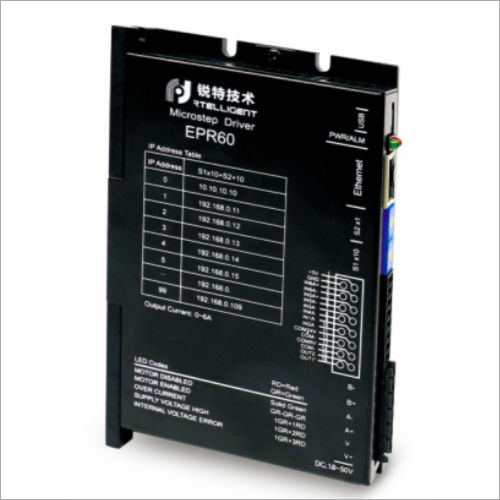

Price:
- 50
- 100
- 200
- 250
- 500
- 1000+

More Products in Stepper Driver Category
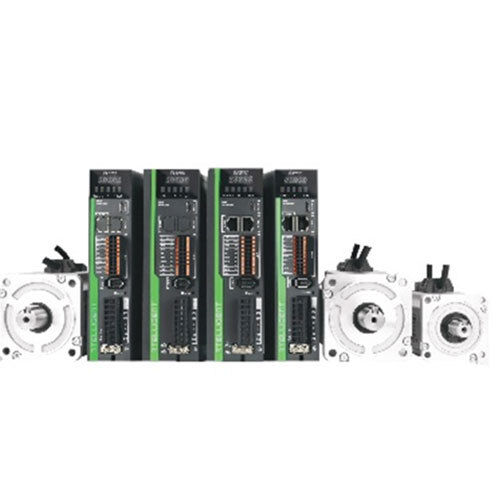
Servo Motor And Driver
Price 19500 INR / Piece
Minimum Order Quantity : 1 Piece
Product Type : Servo Motor & Driver
Application : Industrial
Rated Voltage : 220 Volt (V)
Input Voltage : 220 V AC
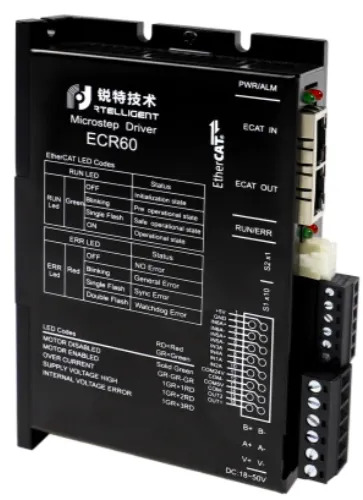
ECR Series EtherCAT Based Stepper Driver
Price 7225 INR / Piece
Minimum Order Quantity : 1 Piece
Product Type : EtherCAT Based Stepper Driver
Application : Industrial automation
Rated Voltage : 1880 V DC
Input Voltage : 1880 V DC
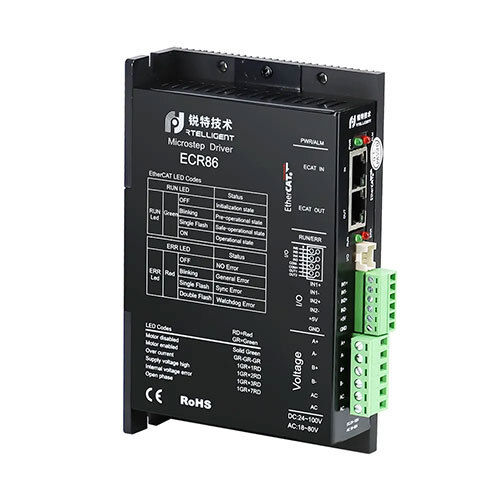
Stepper Drive
Price 2970 INR / Piece
Minimum Order Quantity : 1 Piece
Product Type : Stepper Drive
Application : Industrial
Rated Voltage : 1868VDC Volt (V)
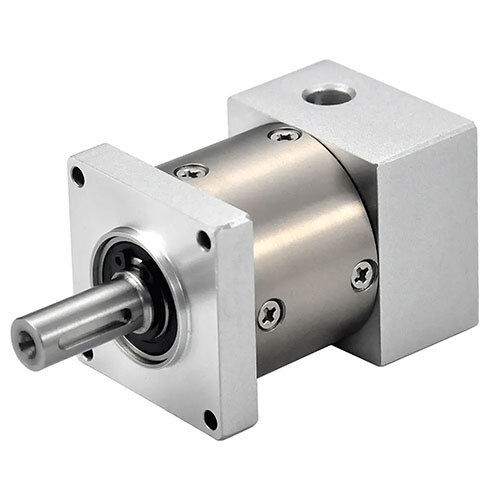
Reducer For Stepper Motor
Price 7600 INR / Piece
Minimum Order Quantity : 1 Piece
Product Type : Reducer For Stepper Motor
Application : Industrial
Rated Voltage : 220 Volt (V)

GST : 24AANCR5533K1Z1


 Send Inquiry
- Pressure Transmitters
- Stepper Motor
- Rotary Encoder
- Stepper Driver
- AC Drive
- Level Transmitter
- Digital Pressure Gauge
- Ultrasonic Level Sensor
- Pressure Sensor
- RSM Series AC Servo Motor
- PLC Control Panel
- SCADA System
- Laser Displacement Sensor
- Textile Sensor
- Proximity Sensor and Switch
- Label Sensor
- Human Machine Interface
- Photoelectric Sensor
- Servo Motor
- Proximity Sensor & Switch
- Variable Frequency Drive
- Flow Meter
- Flow Measuring Instruments
- Temperature Transmitter
- Level Measurement
- Pressure Measurement
- Temperature Measurement
 Send Inquiry
 Send SMS
 Call Me Free
Developed and Managed by Infocom Network Private Limited.

